Failing mortar joints ground out and re-struck to match, protecting the brick and the structure behind it from the damage that starts small and never stops on its own.
On any brick or stone wall, the brick is the strong part and the mortar is the sacrificial part. Mortar is meant to be softer than the masonry around it, so it weathers first, taking the wear that would otherwise crack the brick. That is by design. The problem comes when no one replaces it.
Tuckpointing is the repair for exactly that. It means removing the old, failing mortar from the joints and packing in fresh mortar, then tooling it back to a clean, matched profile. Done right, it restores the wall's ability to shed water and looks like the joints were never touched. Done wrong, or left undone, the wall keeps letting water in.
Tim Phipps does this work by hand, the way it has always been done, start to finish, no subcontractors. It is slow, careful work, and it is some of the most important masonry a home ever gets, because it protects everything behind it.
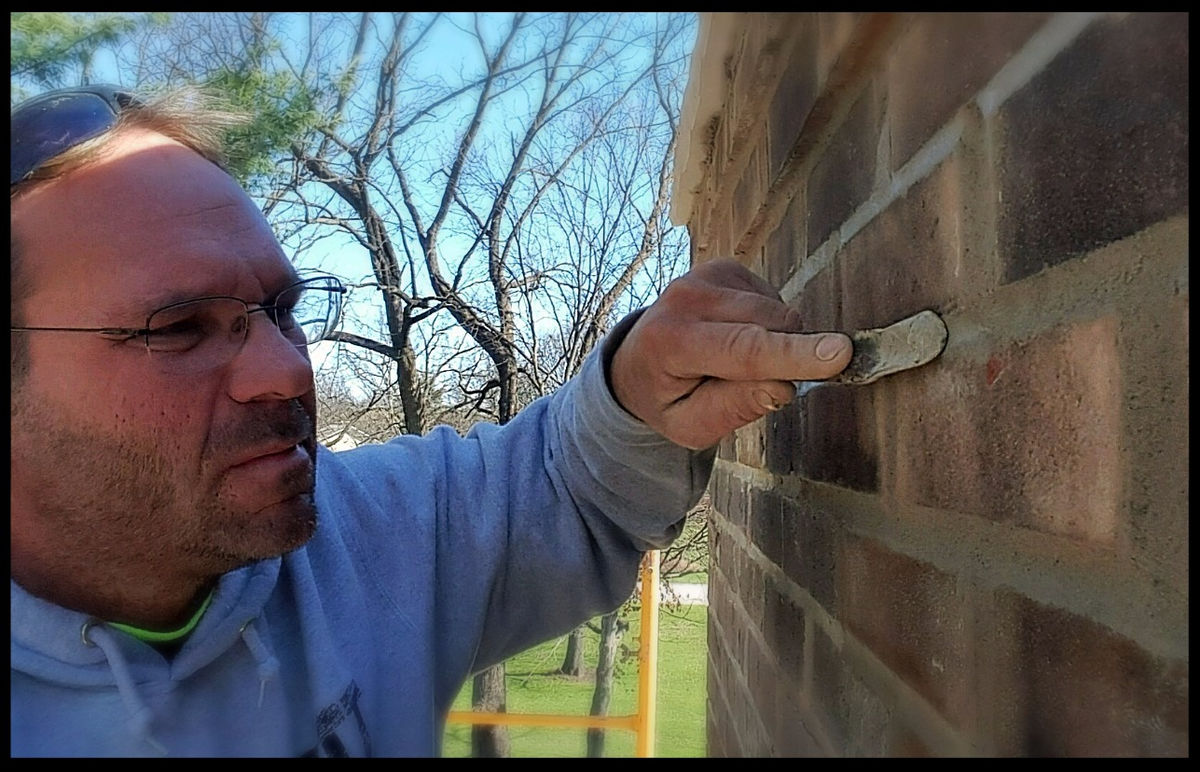
Tim Phipps, hand-tooling a fresh mortar joint on site
Failing mortar is not a cosmetic problem. It is the front edge of real structural damage, and in Indiana the weather speeds it up every single winter.
Once mortar joints crack and crumble, they stop shedding water and start collecting it. That moisture travels into the wall, where it reaches the brick, the ties, and the framing behind them.
Water trapped in a joint freezes, expands, and pries the masonry apart, then thaws and does it again. Over a Central Indiana winter, that cycle can turn a hairline gap into a spalling, flaking wall.
Ignored, failing joints lead to loose brick, interior water stains, and eventually the need to rebuild sections of wall. A few cracked joints today is a repair. Five winters from now it is a rebuild.
Good tuckpointing is a sequence, and every step matters. Skip one and the repair fails early or announces itself for years.
The old, failing mortar is cut out of the joint to a consistent depth, back to sound material, without chipping the brick faces on either side.
The open joints are cleared of dust and debris so the fresh mortar bonds to clean masonry instead of sitting on loose grit.
New mortar, mixed to match the color and strength of the original, is packed firmly into the joints in layers so there are no voids.
The joint is tooled to the same profile as the rest of the wall, so the repair sheds water correctly and blends into the original.
Matching mortar is more than getting the color close, though color matters and a mismatched joint jumps out on an old wall. It is also about strength. New mortar has to be compatible with the masonry it sits in. Mortar that is harder than the surrounding brick will not flex with the wall, and instead of protecting the brick it starts to damage it, especially on older, softer masonry.
So we match the joint two ways: the color and profile so the repair disappears to the eye, and the mix so it behaves the way the wall needs it to. That is a judgment call that comes from twenty years of reading old walls, and it is the difference between a repair that lasts and one that has to be redone. This is the same care our restoration → work is built on, and it protects the same brickwork → you already own.
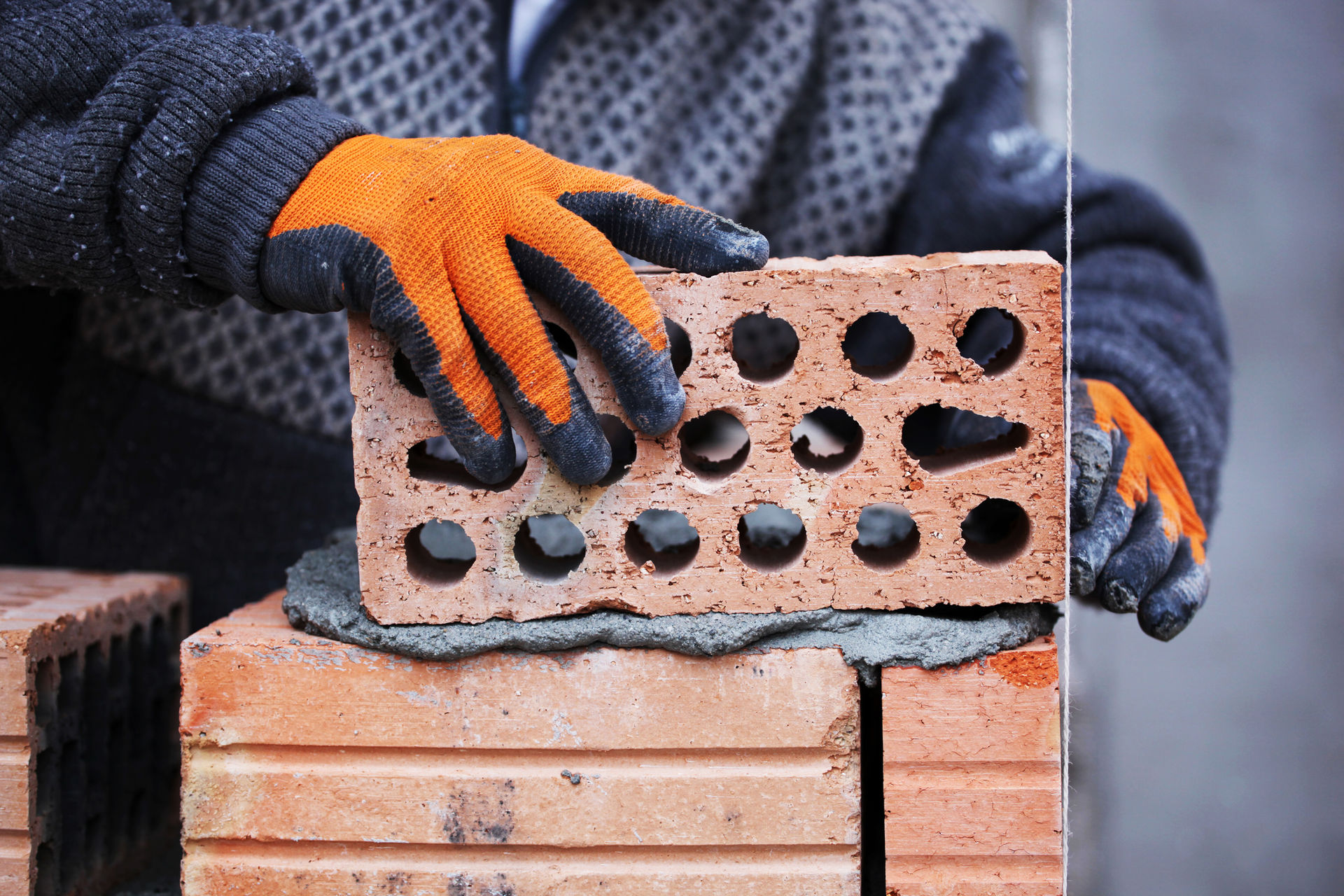
Close, careful hand-work is where a matched joint is won
If you see any of these, the wall is telling you it is time. Catching it early keeps a repair from becoming a rebuild.
Whether it's a chimney that needs rebuilding or a full stone facade on a new custom home, Tim and the Lone Wolf crew will walk your project, talk through the details, and give you an honest quote, no subcontractors, no runaround.