Historic and aging brick and stone brought back with salvaged materials and matched mortar, so the work looks like it was always part of the original.
New masonry is about building. Restoration is about matching, and matching is the hardest skill in the trade.
Restoration work is judged by what you cannot see. A repair from the wrong crew announces itself for the next thirty years: the brick is a shade off, the mortar is too bright or too hard, the joint is struck to a different profile, and the eye catches all of it at once. A repair from the right mason is never noticed at all. It blends into the original so completely that even the homeowner forgets exactly where the old work ended and the new began.
Getting there takes more than skill with a trowel. It takes reading an old wall the way it was built, sourcing or salvaging materials that belong to it, and mixing mortar that matches not just in color but in strength, so the repair protects the aging masonry instead of damaging it. On older, softer brick and stone, a mortar that is too hard does real harm, so the judgment behind the mix matters as much as the hand that lays it. That judgment is what twenty years of restoring Central Indiana masonry buys.
Tim Phipps does this work himself, start to finish, no subcontractors, on historic homes, aging facades, chimneys, and walls. When the goal is preserving what makes a property special rather than replacing it, restoration is the work that saves it.
If it is aging brick or stone worth saving, it is worth restoring rather than tearing out.
Old masonry is often better than anything you could buy to replace it. The brick was denser, the stone was local, and the workmanship came from a time when it was laid by hand as a matter of course. Tearing that out and starting over throws away the very thing that makes a property special, and rarely matches what was there.
Restoration protects that value. A well-restored facade, chimney, or wall keeps the home's character intact, stops the water damage that threatens the structure, and often costs less than a full replacement while lasting for decades more. On a historic or architecturally significant home, like the 1960 Shull house, it is the only responsible option. On any aging home, it is usually the smart one.
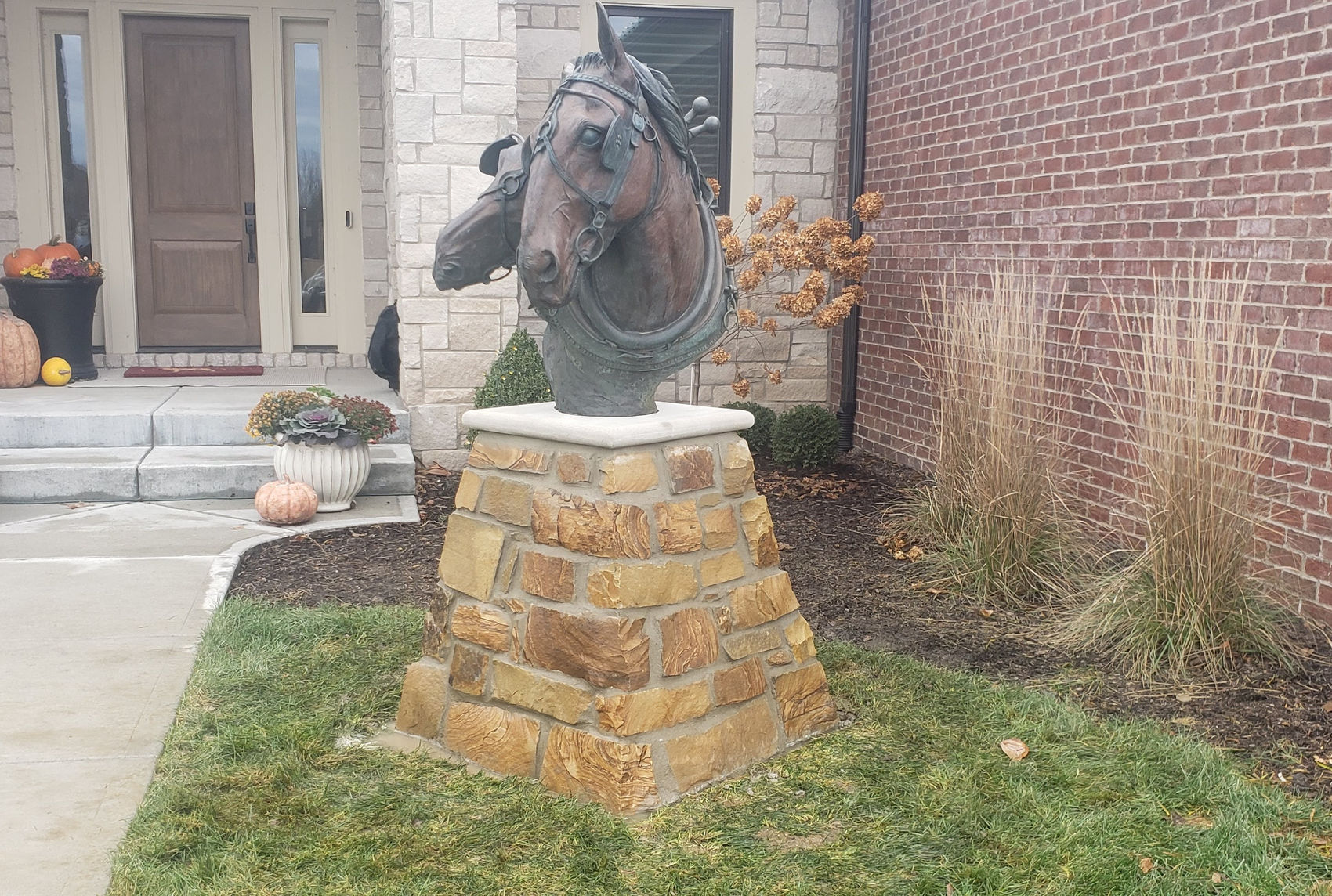
Salvaged stone, rebuilt to the original design, Indianapolis
Before you replace aging brick or stone, let a master mason tell you whether it can be saved. Call 317.750.2413 for a free, honest estimate.
Whether it's a chimney that needs rebuilding or a full stone facade on a new custom home, Tim and the Lone Wolf crew will walk your project, talk through the details, and give you an honest quote, no subcontractors, no runaround.